Humic-based soil conditioners are organic agricultural inputs derived from natural humic substances that play a crucial role in improving soil health and crop productivity. These products enhance soil structure, stimulate microbial activity, and improve nutrient availability, making them essential in modern sustainable farming practices.
Among humic products, potassium humate-based formulations are widely used due to their dual benefit of supplying humic substances along with potassium, a vital plant nutrient. Farmers across India and global agricultural markets rely on these products to improve yield, root development, and stress resistance in crops.
Comparing Potassium Humate and Potassium F Humate is important because, although both are humic-based conditioners, they differ significantly in solubility, composition, and application suitability. Understanding these differences helps farmers, distributors, and bulk buyers select the most effective product for soil application, fertigation, or foliar spraying.
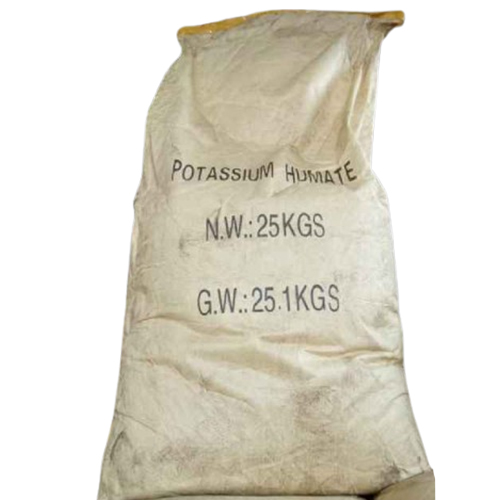
Potassium humate is a water-soluble organic soil conditioner produced from natural humic sources such as leonardite or lignite. It contains a high concentration of humic acid combined with potassium, making it effective for soil conditioning and nutrient availability improvement.
This product works primarily at the soil level by enhancing cation exchange capacity, improving soil structure, and increasing the efficiency of applied fertilizers. It is commonly used in basal soil application and drip irrigation systems.
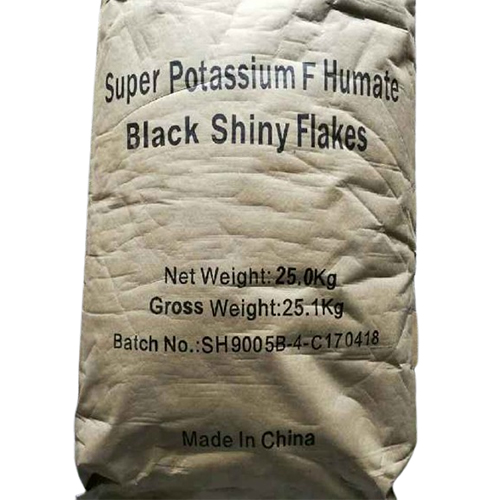
Potassium F Humate is an advanced, fully soluble form of potassium humate that contains both humic acid and a higher proportion of fulvic acid. The “F” grade indicates enhanced solubility and finer molecular composition, making it suitable for liquid applications.
Unlike regular potassium humate, Potassium F Humate dissolves completely in water without residue, which allows it to be used effectively in foliar sprays and fertigation systems. Its smaller molecular size improves nutrient absorption through plant leaves and roots.
View Products
View Products
View Products
| Comparison Parameter | Potassium Humate | Potassium F Humate |
|---|---|---|
| Water Solubility | 85–90% soluble; may leave fine residue if not filtered | ≥99% water soluble; no residue |
| pH (1% Aqueous Solution) | 9.0 – 10.5 (strongly alkaline) | 7.5 – 9.0 (mildly alkaline) |
| Humic Acid Content (% w/w) | 60 – 70% | 40 – 55% |
| Fulvic Acid Content (% w/w) | 1 – 5% | 15 – 25% |
| Application Method Suitability | Soil application, broadcasting, basal dosing | Foliar spray, fertigation, drip irrigation, hydroponics |
| Absorption Efficiency | Indirect uptake via improved soil CEC and root zone | Direct uptake through leaves and fine roots |
| Effect on Soil Structure | Strong improvement in aggregation, porosity, and water retention | Moderate soil conditioning; more plant-focused |
| Crop Response Speed | Slow to moderate (7–14 days) | Fast (3–5 days) |
| Recommended Dosage Pattern | Higher dosage due to partial solubility | Lower dosage effective due to high solubility |
| Usage Preference | Long-term soil fertility and land reclamation | Precision nutrition and stress correction |
| Suitability for Drip Systems | Not recommended for fine filtration | Fully safe |
| Cost Consideration | Lower cost per kg | Higher per kg, but lower cost per acre |
Soil application: Potassium Humate is primarily applied to soil either during land preparation or through irrigation water to improve soil structure and nutrient retention. Typical application rates range from 2–5 kg per acre for powder form or 2–4 liters per acre for liquid form, depending on soil condition and organic matter levels. It is most effective when incorporated into the root zone, where it enhances microbial activity and long-term fertility.
Drip irrigation and fertigation: Both Potassium Humate and Potassium F Humate can be used through drip systems, but F grade is preferred due to its higher solubility. Recommended dosage generally falls between 500 g–1 kg per acre per cycle or 500 ml–1 liter per acre in liquid form. Proper filtration is essential to avoid emitter blockage, especially when using powder grades.
Foliar spray usage: Potassium F Humate is ideal for foliar application due to its low molecular weight and fast absorption. Standard foliar dosage ranges from 200–400 g per acre or 200–300 ml per acre, diluted in sufficient water for uniform coverage. Applications are most effective during vegetative growth and stress conditions.
Wholesale pricing of humate products depends heavily on raw material source (leonardite grade), processing method, solubility, and consistency. Imported or high-oxidation leonardite typically commands higher prices due to better humic content and performance.
Leonardite with higher organic carbon and lower ash content increases production cost but delivers superior agronomic results. Products made from low-grade lignite are cheaper but less effective.
Higher active content directly impacts price. Products with 70–80% humic acid or 12–18% fulvic acid are priced higher due to concentration and purity.
Powder forms are more economical for bulk buyers, while liquid formulations cost more due to formulation, stabilization, and transport weight.
Bulk orders (1 MT and above) significantly reduce per-kg cost. Jumbo bags and tanker liquid supply are the most cost-effective formats.
Indicative wholesale price range (India, bulk orders):
(Prices may vary by quantity, formulation, and testing specifications.)
View Products
View Products
View Products
When to choose Potassium Humate
Potassium Humate is best suited for soil application where the objective is long-term soil improvement, increased organic matter, and enhanced nutrient holding capacity. It is ideal for degraded soils, open-field crops, and plantation agriculture.
When Potassium F Humate is more suitable
Potassium F Humate should be selected when fast plant response is required, particularly for foliar spray and drip irrigation. It is preferred for high-value crops, protected cultivation, and stress recovery applications.
Crop stage and soil condition considerations
Early vegetative and soil preparation stages benefit more from Potassium Humate, while flowering, fruiting, and stress periods respond better to Potassium F Humate. Soil pH, texture, and irrigation method should guide final selection.
Shiwani Enterprises is a trusted supplier of humic-based agricultural inputs, specializing in high-quality Potassium Humate and Potassium F Humate for modern farming practices. The company caters to soil application, fertigation, and foliar nutrition requirements, making its products suitable for field crops, horticulture, plantations, and high-value cash crops. With a strong understanding of crop nutrition needs, Shiwani Enterprises focuses on delivering products that provide consistent agronomic performance rather than generic formulations.
Quality assurance is a core strength of Shiwani Enterprises. Raw materials are sourced from reliable deposits and processed under controlled conditions to maintain stable humic acid, fulvic acid, potassium content, and solubility parameters. Each batch is monitored for key quality indicators such as pH, moisture, and active content, ensuring uniformity across supplies.
In addition to product quality, Shiwani Enterprises offers competitive wholesale pricing, flexible bulk packaging options, and dependable supply chain support. The company is equipped to handle large domestic orders as well as export requirements, supported by proper documentation and logistics coordination. With a focus on timely delivery, transparent communication, and long-term partnerships, Shiwani Enterprises is a reliable choice for distributors, exporters, and large-scale agricultural buyers.





Copyright © 2026 Shiwani Enterprises All Rights Reserved.